yk***@gmail.com
You addressed all the concerns I had been thinking about.
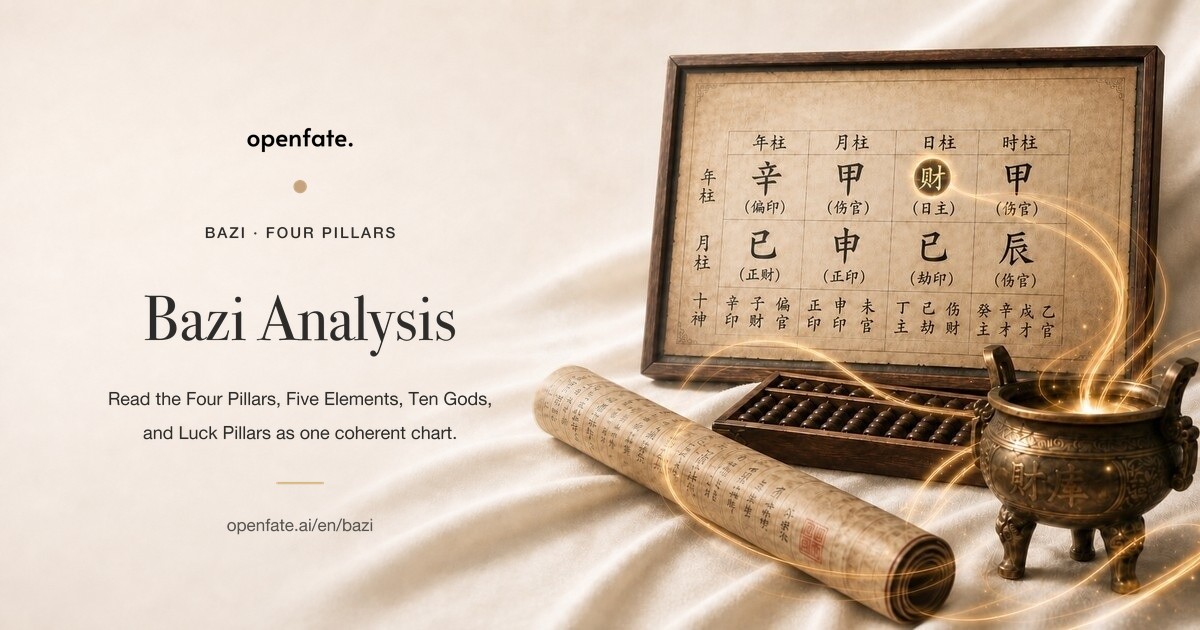
Start with a calculated Four Pillars chart, then interpret Day Master strength, the Five Elements, Ten Gods, Hidden Stems, combinations, and Luck Pillars. Chart facts and traditional interpretation stay clearly separated.
We take pride in delivering thoughtful reports that help people see their timing, patterns, and next steps more clearly.
GitHub Open SourceEach tool begins with declared inputs and deterministic rules. Birth-chart systems keep their calculated structure visible; AI explains those results without rewriting the underlying facts.
Birth details, questions, selections, or cast inputs are normalized for the relevant tool.
Each tool produces its chart, draw, cast, or core facts from its declared rules.
AI interprets the visible facts and structure without changing the deterministic inputs.
Interpret the Day Master, Ten Gods, Five Elements, and Luck Pillars while keeping chart facts separate from reflective guidance.
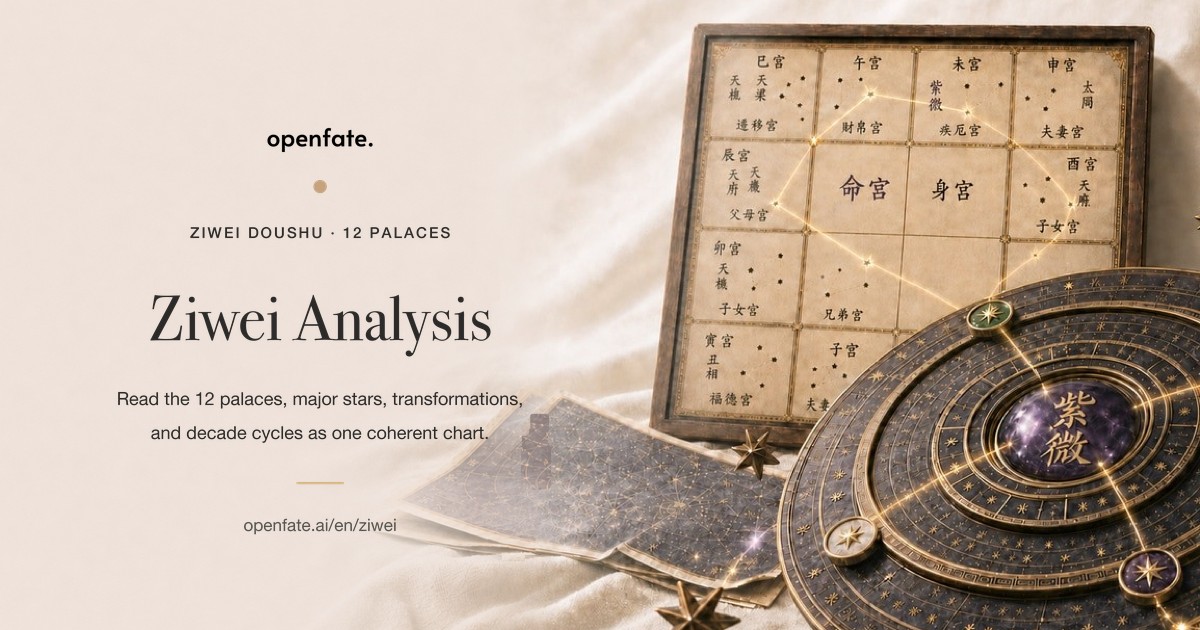
Interpret the Life and Body Palaces, palace relationships, stars, Four Transformations, decade cycles, and annual cycles without mixing chart facts with explanation.
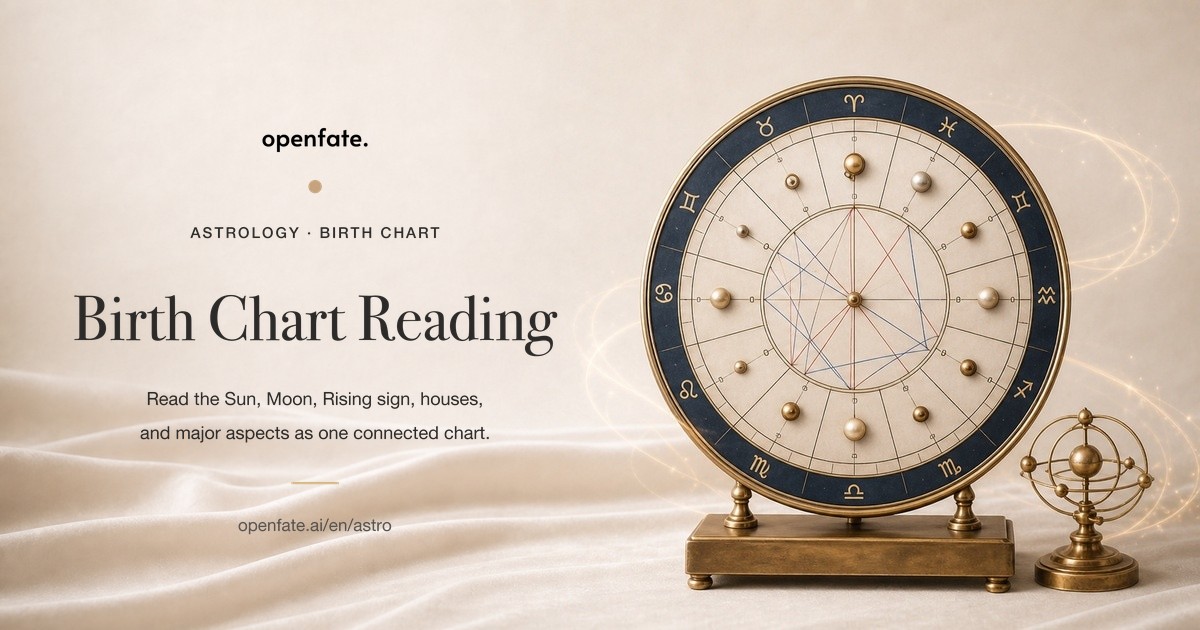
Read the Sun, Moon, Rising sign, planetary placements, houses, and major aspects while keeping chart data separate from interpretation.
Compare 2-3 independently calculated systems axis by axis. Similar themes add perspective but do not establish empirical reliability.
Read the lagna, Moon nakshatra, divisional charts, and dasha periods while keeping calculated chart data separate from interpretation.
Understand your natural rhythm, decision timing, and pressure pattern in plain language, with practical guidance for work, relationships, and this week.
Start with a calculated Shukuyo birth mansion and explore the traditional 27-mansion themes without turning symbolism into certainty.
Compare Tarot, Meihua I Ching, Liu Yao, Lenormand, Qimen Dunjia, and Guanyin lots by how each begins and what it helps you examine. Every method shows its fixed result before any optional AI reading.
Generate a Bazi archetype card and inspect chart-signal consistency; the result is reflection, not diagnosis or measurement.
Look up Huangli fields while keeping calendar data separate from traditional interpretation.
Compare symbolic daily themes and time windows, then verify real conditions before acting.
Editorial research on Bazi, relationships, wealth, annual timing, and Eastern metaphysics.
A production-grade Bazi calculation server for Claude, Cursor, Codex, Cline, and every MCP-compatible AI agent.
Everything you need to know about reports, credits, and how it works.
Credits & Account
Usage & Features
Charting & Algorithm Logic
Technical & Developers
Troubleshooting
Privacy & Legal
About Me
A Bazi reading starts with a calculated Four Pillars chart, then examines the Day Master in seasonal context, Five Element balance, Ten Gods, Hidden Stems, combinations and clashes, and Luck Pillars. The chart facts remain fixed; the reading organizes them into themes for reflection rather than guaranteed outcomes.
A Bazi chart records the Year, Month, Day, and Hour Pillars as Heavenly Stem and Earthly Branch pairs. Those calculated pillars, along with the Day Master, Hidden Stems, Five Elements, and Ten Gods, form the factual layer used by a reading.
Interpretation begins only after those chart facts are confirmed. Strength, useful elements, relationships, career, and timing are traditional symbolic judgments that should remain open to uncertainty and comparison with lived evidence.
Confirm the Year, Month, Day, and Hour Pillars before interpreting them, then identify the Day Stem, commonly called the Day Master. The Day Master is not a stand-alone good-or-bad label; it must be read with the birth season, Hidden Stems, and the other Stem and Branch relationships.
The Month Branch supplies the seasonal context, Five Element relationships show support and control, Hidden Stems add internal structure, and the Ten Gods describe how each element relates to the Day Master. Read these layers together instead of treating element counts or a single Ten God as a complete conclusion.
Luck Pillars are approximately 10-year cycles derived under declared direction and start-age rules, while annual transits add the year's Stem and Branch. Their interactions can organize themes for review, but they do not prove that a job change, relationship event, gain, or loss will occur.
Calculated pillars and structural relationships can be reproduced from the same inputs and rules; claims about personality, career, wealth, relationships, health, or future events remain traditional interpretation. Use them as questions for reflection, not as substitutes for medical, legal, financial, or safety decisions.
Common questions about reading a calculated Four Pillars chart, Day Master, Ten Gods, and Luck Pillars.
A Bazi calculator translates your birth data into the Four Pillars (Heavenly Stems and Earthly Branches). An AI Bazi reading takes that raw chart and interprets what it means for your Day Master, Ten Gods, and Luck Pillars.
Birth time affects the Hour Pillar used by this reading. If the historical time is unknown, do not invent one; use the Birth-Time Calibration tool to compare candidate hours and preserve the uncertainty.
Luck Pillars are approximately 10-year cycles calculated under declared direction and start-age rules. Their career and relationship meanings are traditional symbolic interpretations, not guarantees that an opportunity or challenge will occur.