Personality TestSBTI
All 27 SBTI Personality Types, Explained
Core Answer
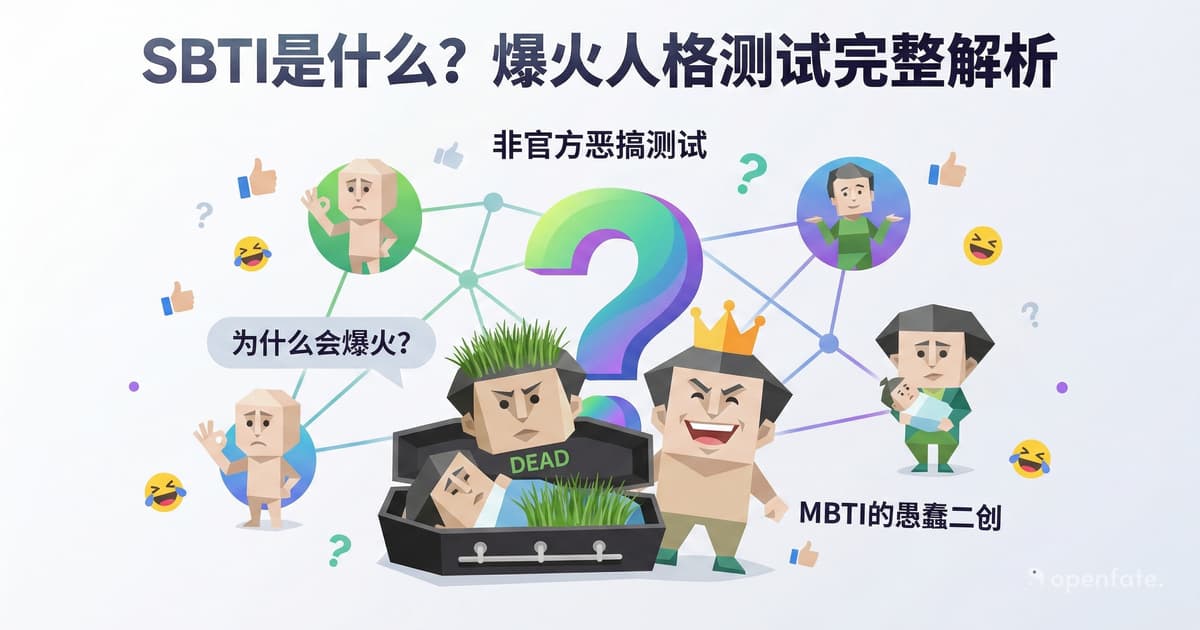
SBTI has 27 personality types. The test uses 32 prompts, 15 dimensions, and 5 model groups to turn playful behavioral signals into one of 27 shareable outcomes. It is framed as an entertainment-first personality format for comparison, self-observation, and social sharing rather than clinical assessment.
Introduction
SBTI currently has 27 personality outcomes. According to the official SBTI pages, the test uses 32 prompts to map users across 15 dimensions inside 5 personality model groups, then assigns one of 27 possible results.
The site also says SBTI is meant for entertainment, comparison, and self-observation rather than as a serious psychological assessment. So the goal of this page is not to treat SBTI like a clinical framework, but to make the full type library easy to scan and understand.
SBTI at a glance
Total outcomes: 27
Question flow: 32 prompts
Core structure: 15 dimensions
Model groups: 5
Positioning: a playful personality test for entertainment, comparison, and self-observation
What are the 27 SBTI personality types?
Below is the full 27-type library, organized with each code, label, and a one-line summary so you can quickly grasp the overall personality tone of every result.
- CTRL
The Handler
A control-oriented type that likes structure, direction, and keeping situations under management. - ATM-er
The Walking ATM
The over-giver who keeps paying, helping, or absorbing other people’s needs. - Dior-s
The Cynic Sage
A skeptical realist who distrusts hype and sees through surface-level performance. - BOSS
The Boss
The person who instinctively takes charge and feels safer when holding the wheel. - THAN-K
The Thanker
The type that reframes almost everything through gratitude, optimism, or positive meaning. - OH-NO
The Alarmist
A high-alert personality that scans for risk, problems, and worst-case scenarios first. - GOGO
The Go-Goer
Fast-moving, action-heavy, and less interested in hesitation than execution. - SEXY
The Heartthrob
Naturally magnetic, high-presence, and easy for others to notice. - LOVE-R
The Lover
Emotionally rich, romantic, and more likely to idealize connection and feeling. - MUM
The Mom Friend
Protective, nurturing, and often the emotional caretaker of the group. - FAKE
The Masker
Highly adaptive in social situations, with a strong tendency to code-switch or perform different versions of self. - OJBK
The Whatever
Low-friction and detached, with a default attitude of “anything works.” - MALO
The Chaos Monkey
Playful, unserious, impulsive, and more interested in the fun of the moment than polished behavior. - JOKE-R
The Jester
Humor-first, socially entertaining, and likely to hide seriousness behind jokes. - WOC!
The Whoa Person
Reactive, expressive, and highly tuned to shock, absurdity, and “did that really just happen?” energy. - THIN-K
The Thinker
Analytical, overthinking, and inclined to process even silly inputs with real seriousness. - SHIT
The Malcontent
Cynical and critical, but often sharp at spotting flaws before other people do. - ZZZZ
The Snoozer
Inactive until forced into motion, then suddenly capable under pressure. - POOR
The Specialist
Narrowly focused, selective with energy, and likely to go deep on one priority. - MONK
The Monk
Withdrawn, boundary-heavy, and strongly protective of solitude and inner space. - IMSB
The Self-Roaster
A self-attacking, conflicted type that mixes irony, doubt, and inner contradiction. - SOLO
The Loner
Independent, self-protective, and more comfortable with distance than overexposure. - FUCK
The Wild One
Rebellious, intense, and resistant to rules, filters, or polite expectations. - DEAD
The Deadpan
Burnt out, flat, detached, and emotionally drained in a way that reads as dry or numb. - IMFW
The Fragile One
Sensitive, insecure, and easily affected by tone, approval, or emotional safety. - HHHH
The Goofball
Absurd, unserious, laughter-driven, and difficult to pin down with normal logic. - DRUNK
The Drunkard
Escapist, emotionally loose, and associated with release, chaos, or coping through intensity.
How SBTI generates a type
Officially, SBTI says it reads people through five personality models: Self Model, Emotion Model, Attitude Model, Action Model, and Social Model. Across those five groups, the test projects users into 15 dimensions, then shows a final type plus a fifteen-dimension breakdown on the result page.
The official descriptions say these models look at things like self-evaluation, attachment and independence in relationships, worldview and rules, action style, and social boundaries. That is part of what makes the results feel more personal than a simple introvert-versus-extrovert label.
Why these types spread so easily online
SBTI’s type system is built for the internet. The official language is intentionally playful and less clinical, and the results are designed to be easy to read, compare, save, and repost. The platform also gives each completed test a dedicated result page and downloadable share card, which makes the format naturally social.
That is why people often search for the full type list even before taking the quiz. The names are memorable, the labels feel instantly legible, and the categories are broad enough that users can quickly map them onto themselves or their friends.
SBTI types vs MBTI types
SBTI and MBTI are not the same system. The official SBTI site describes itself as a lighter, more satirical alternative that borrows the fun of type-based self-reflection but uses a looser, more meme-native voice. MBTI is a classic personality framework; SBTI is closer to an internet-flavored type system built for entertainment and self-observation.
So the cleanest distinction is this: MBTI is usually treated as a more established typology, while SBTI is designed to be faster, louder, and more socially shareable. One behaves like a framework; the other behaves like a viral label system.
Related Reading
FAQ
How many SBTI personality types are there?
There are 27 SBTI outcomes in the official type library.
How does SBTI assign a type?
The test uses 32 prompts, maps users across 15 dimensions, and reads those dimensions through 5 model groups before assigning a final result.
Are SBTI types official psychological categories?
No. The official site says SBTI works best as entertainment, comparison, and self-observation, not as a serious psychological assessment.
Is SBTI the same as MBTI?
No. SBTI is presented as a more playful, meme-native personality test, while MBTI is a more established framework.
A viral label can be fun, but a deeper pattern is more useful
If you want to go beyond internet-type labels and understand your long-term relationship, career, and life patterns, the next step is a more structural reading.
 Start Your Free Reading
Disclaimer: Metaphysics is a traditional cultural perspective, not a substitute for modern science. Content is for reference only; please exercise rational judgment based on your specific situation.