Bazi AcademyCombinations & Clashes
How to Read Combinations, Clashes, Punishments, and Harms in Bazi: A Chart Is Not Single Symbols, but a Relationship Network
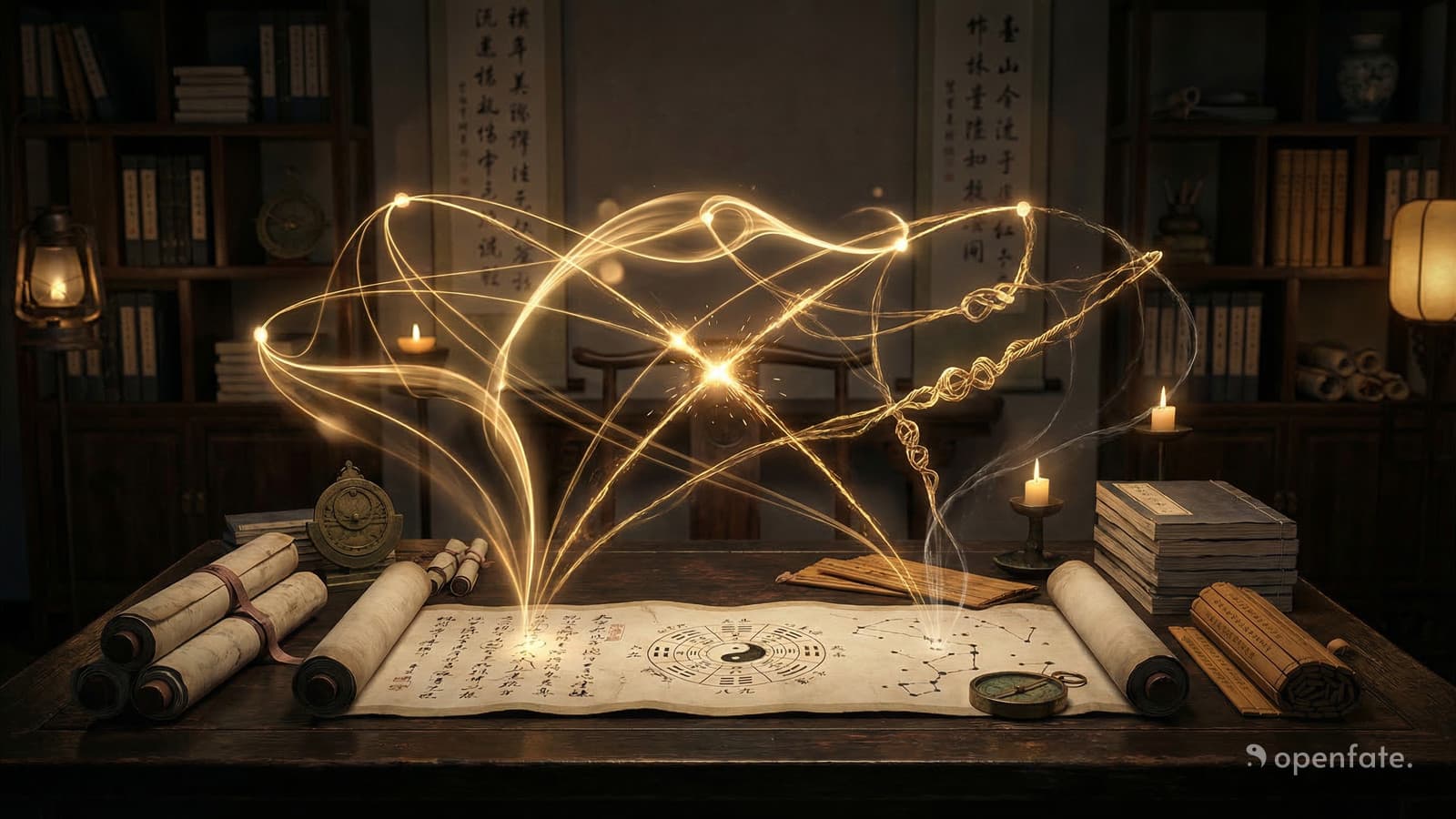
How to Read combinations, Clashes, Punishments, and Harms?
Once people start learning Bazi, they often fall into a "label-based" understanding: combinations are good, clashes are bad, punishments are chaos, and harms are trouble.
This approach is misleading. These interactions are not simple switches for luck. They are relationship modes between different forces within the chart.
A chart is not a pile of symbols; it is a moving network where interactions determine the flow of energy.
Core Answer
Combinations represent unity and tethering, Clashes trigger abrupt separation, Punishments denote friction, and Harms signal hidden betrayal. As Yuan Hai Zi Ping notes, these profound energetic collisions dictate the timing and severity of major life transitions and unexpected relational shifts.
What Do They Actually Mean?
These terms describe how Heavenly Stems and Earthly Branches interact with each other.
Combination
Drawing close, bonding, merging, or forming alliances.Clash
Direct collision, opposition, movement, or disruption.Punishment
Tension, internal friction, ongoing strain, or structural discomfort.Harm
Subtle damage, hidden unpleasantness, or chronic mismatch.
Why a Chart is a Network
Bazi is not read two characters at a time. Each interaction is a node in a structural web that pulls on other parts of the chart.
We must look at the position, what is affected (Day Master, Spouse Palace, etc.), and whether luck cycles trigger the relationship.
Heavenly Stem Combinations
These represent surface-level visible alliances (e.g., Jia-Ji, Yi-Geng).
Alignment
Two forces drawing closer together.Redirection
An original route is diverted by the combination force.Binding
Forces can be tied up or restrained rather than transformed.
Earthly Branch Combinations
Branch combinations provide deeper, environmental connections.
They aren't always positive. If a force needs to act independently but gets "sticky" due to a combination, it can lead to hesitation and inefficiency.
Earthly Branch Clashes
Clashes represent momentum and change, often linked to relocation or restructuring.
What is Clashed
Clashing a root or the Month Branch is far more significant than clashing a marginal spot.Chart Stagnation
In a blocked chart, a clash can be the necessary force that opens up life path.
Punishment: The Grinding Friction
Unlike a clash, a punishment grinds. It represents persistent internal tension, recurring problems, and structural awkwardness.
Harm: The Underestimated Quiet Drain
Harms are often subtle and chronic. They represent hidden erosion or mismatches that don't explode but cause long-term fatigue.
The Trigger of Timing
Many natal relationships sit quietly until luck pillars or annual timing trigger them, bringing hidden potential or issues to the surface.
Common Beginner Mistakes
Combination = Good
A combination can bind or delay a useful force.Clash = Bad
A clash can break open a stagnant situation.Fragmented Reading
Reading symbols in isolation without looking at the whole network.Ignoring Harms
Harms are often persistent sources of structural decay.
Building a Network Mindset
Upgrade from reading "labels" to reading "structural interactions." See whether an interaction helps, binds, opens, or drains the chart.
FAQ
What do combinations, clashes, punishments, and harms mean?
They are different interaction types between Heavenly Stems and Earthly Branches, representing attraction, collision, friction, and subtle damage.
Is a combination always good and a clash always bad?
No. A combination can bind up a chart, while a clash can break open a blocked situation. The result depends on the structure.
Stem combinations vs. Branch combinations?
Stem combinations are more surface-level and visible, while Branch combinations are deeper, structural, and environmental.
Punishment vs. Harm?
Punishment is like a grinding friction or long-term internal strain. Harm is more like subtle hidden damage or a chronic mismatch.
What is the best way to judge them?
Identify who is involved, where it happens, how it affects the main structure, and whether timing activates it.
Ready to decode your chart network?
Calculate your accurate Bazi and see which relationships are helping or hindering you.
 Get My Accurate Chart
Disclaimer: Metaphysics is a traditional cultural perspective, not a substitute for modern science. Content is for reference only; please exercise rational judgment based on your specific situation.